
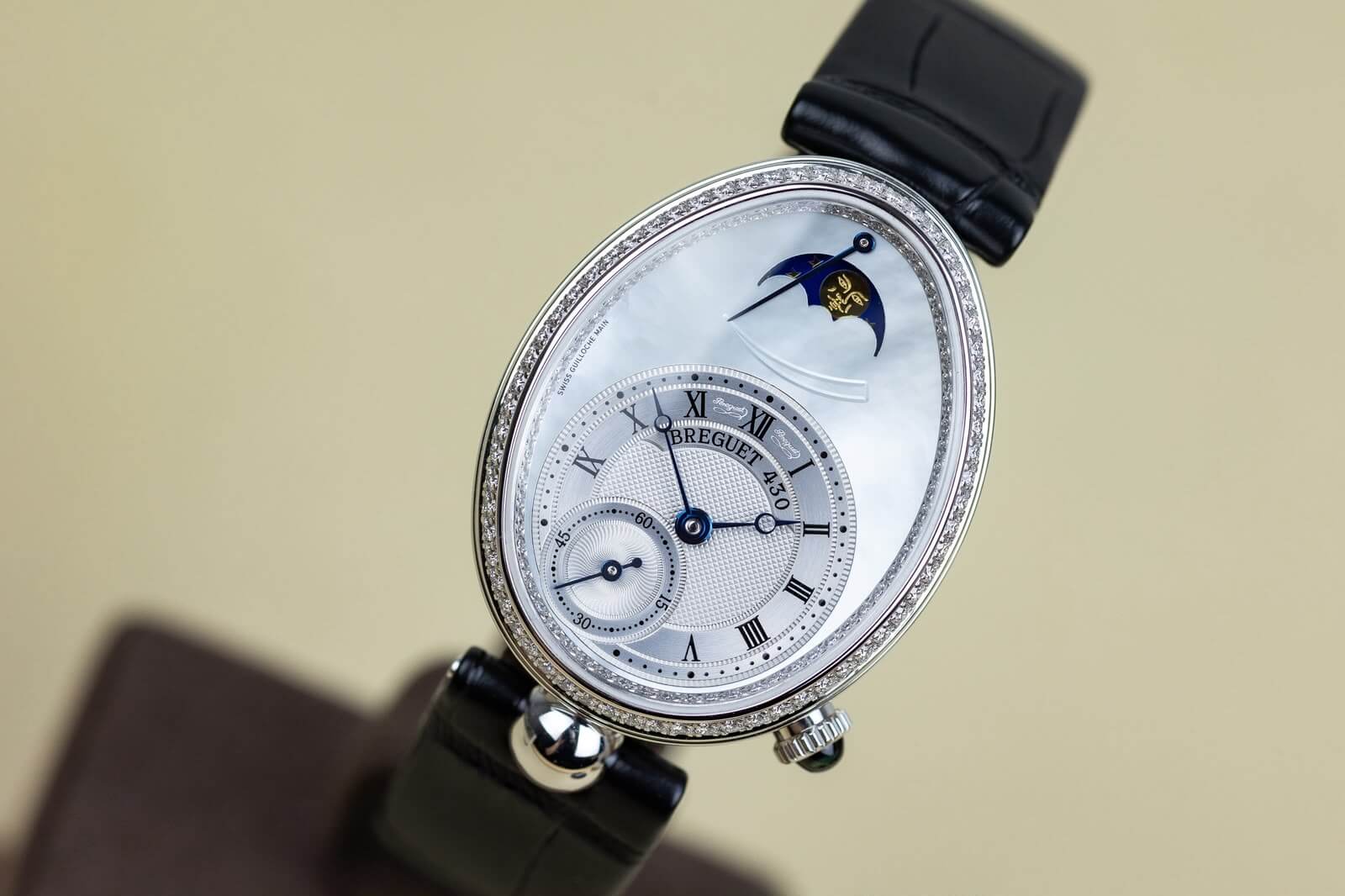
Some watches owe their status to technical innovation. Others owe it to their design. The Breguet Reine de Naples combines both worlds and also has an exceptional historical story.
The collection traces its origins to a special commission from 1810. At that time, Caroline Murat, Queen of Naples and sister of Napoleon Bonaparte, commissioned Abraham-Louis Breguet to create a watch designed to be worn on the wrist. This gave rise to what many consider to be the first documented wristwatch in history.
A Revolutionary Order
On June 8, 1810, the House of Breguet recorded a remarkable order from Caroline Murat. In addition to a travel clock, she requested a repeater watch that could be worn as a wristwatch. At the time, virtually all timepieces were still designed as pocket watches, making her request exceptionally forward-thinking.
It took more than two years to make. The watch was delivered in December 1812. The archives reveal that it was an extremely thin repeater watch with a silver Dial, Arabic numerals, a thermometer, and a power reserve indicator. The entire watch was attached to a Bracelet braided hair with gold thread.
Although the original watch eventually disappeared from view, the documentation was preserved in the Breguet archives. This allowed the company to revisit this historic creation more than a century and a half later.
The Return of a Historic Design
In 2002, Breguet introduced the Reine de Naples collection as a tribute to Caroline Murat’s watch. Since the original no longer existed, the brand relied on detailed descriptions from the archives.
The most recognizable element of the collection is the egg-shaped Case. This shape immediately sets the Reine de Naples apart from virtually all other women’s watches on the market. The curved lines reflect its historical origins, while the design has an unmistakably modern look.
Several details also pay homage to the original watch. For example, the crown is positioned at the 4 o'clock position, and the Bracelet distinctive clasp is Bracelet by historical descriptions of the original wristwatch.
More than just a women's watch
In today's watch world, the Reine de Naples is often regarded as one of the most recognizable ladies' collections. Yet its appeal isn't solely about gemstones or decorative finishes.
Over the years, the collection has featured a variety of complications, including Moon phase and striking mechanisms. In this way, the Reine de Naples remains true to the technical tradition of the House of Breguet.
In addition, the collection serves as a tangible reminder of an important moment in watchmaking history. While many modern watches draw inspiration from iconic models of the twentieth century, the Reine de Naples pays homage to an event that took place more than two hundred years ago.
A unique place in the history of watchmaking
The Reine de Naples is more than just an elegant creation in the Breguet collection. The watch represents a direct link to one of the earliest known wristwatches ever made.
That’s what makes the collection so special. Not only because of its distinctive shape, but above all because of its historical significance. After all, few modern watches can trace their origins back to the very first steps of the wristwatch as we know it today.